
Floors Built to Handle Daily Family Life
Residential Coatings in Mapleville for garage floors, basements, and patios exposed to moisture and freeze-thaw cycles
The Perfectionist Coatings & Polishing applies polyurea, polyaspartic, and epoxy coatings to garage floors, basements, and patios across Mapleville and surrounding areas in Rhode Island and Massachusetts. Homeowners dealing with stained concrete, moisture penetration, or surfaces that crack under seasonal freeze-thaw exposure need protective coatings that resist daily wear while preventing water intrusion. Jobs up to 700 to 800 square feet are completed in 24 hours or less, with flexible scheduling available for larger residential properties.
The coating process begins with substrate preparation to remove contaminants and profile the concrete, followed by primer application and a finish coat in polyurea or epoxy based on the specific exposure conditions of your floor. Each material offers different advantages—polyurea cures quickly and handles temperature extremes, while epoxy provides excellent adhesion and chemical resistance for garage environments with oil and fluid exposure. Service is capped at a one-hour radius from Mapleville to maintain quality control and ensure same-day completion for standard residential jobs.
Request an on-site evaluation to determine which coating system matches your floor's current condition and usage patterns.
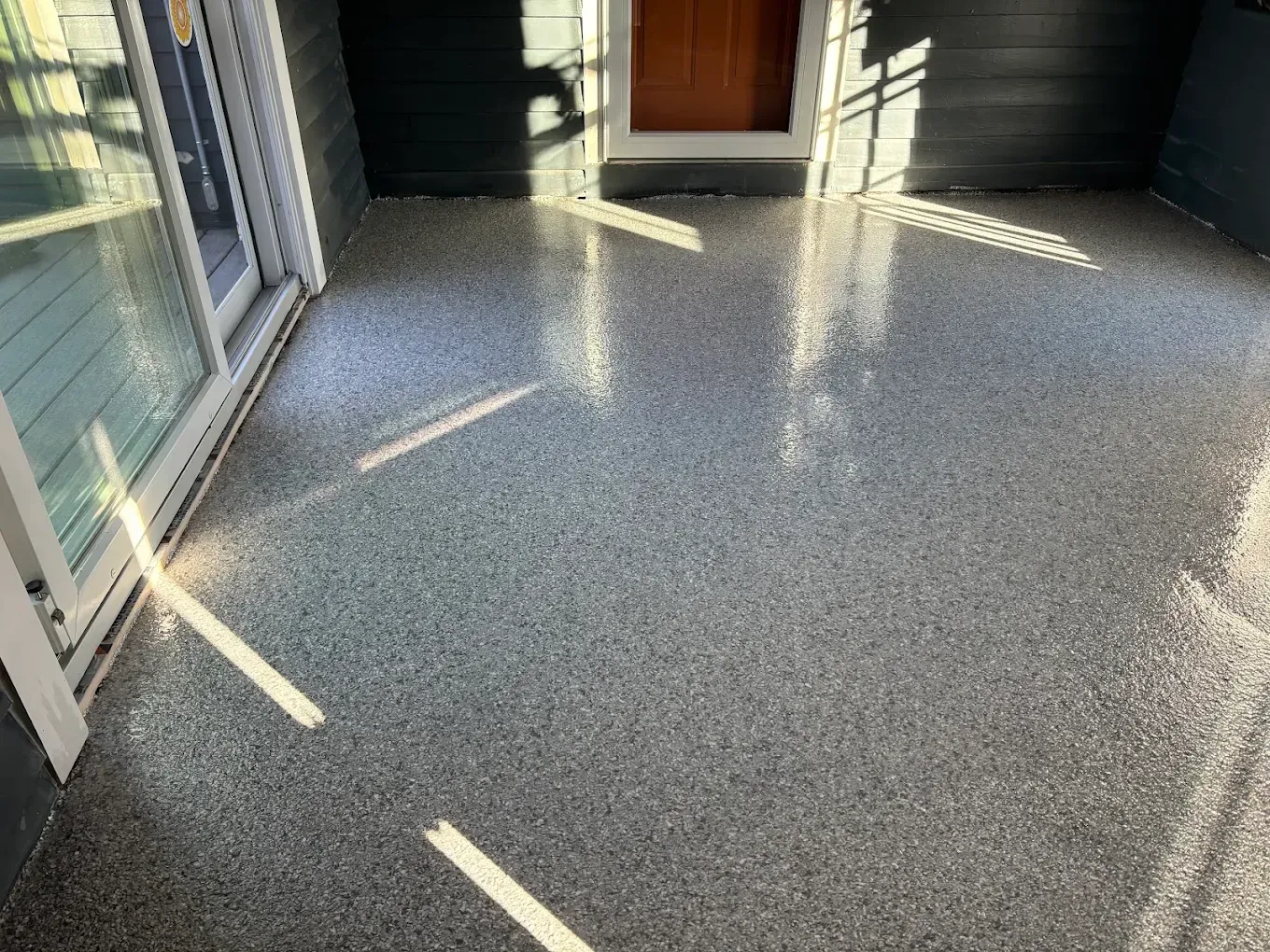
Why Proper Surface Preparation Determines Coating Performance
Surface preparation accounts for the majority of coating adhesion and longevity, especially on concrete that has been exposed to vehicle fluids, salts, or moisture over multiple seasons. The concrete is mechanically profiled to create adequate surface texture, existing coatings or sealers are removed, and the substrate is tested for moisture levels that could compromise bonding. Without this step, coatings delaminate within months regardless of the finish product applied on top.
Once the coating cures, your floor repels oil stains, resists moisture penetration that leads to efflorescence and spalling, and provides a non-porous surface that can be cleaned with basic household products. You will notice that salt and sand tracked in during winter months no longer embed into the concrete, and fluids from vehicles wipe away without leaving permanent discoloration. The floor maintains a consistent appearance rather than developing the patchy, degraded look common on untreated garage surfaces after years of seasonal exposure.
The finish coat options include slip-resistant additives for high-traffic areas and UV-stable topcoats for patios and outdoor surfaces exposed to direct sunlight. Polyaspartic coatings cure faster than traditional epoxy, allowing same-day vehicle return on garage floors, while epoxy systems offer extended working time for larger basement applications that require careful edge detailing.
Questions Homeowners Ask Before Coating Projects
Residential coating projects in Rhode Island and Massachusetts share common concerns about material selection, curing time, and long-term durability under local climate conditions.
What is the difference between polyurea and epoxy coatings for garage floors?
Polyurea cures in hours and handles extreme temperature swings common in unheated garages, while epoxy provides superior chemical resistance against automotive fluids and requires longer cure times before vehicle traffic can resume.
How long does the coating process take for a standard two-car garage?
Jobs up to 700 to 800 square feet are completed in 24 hours or less, including substrate preparation, primer application, and finish coat, with most garages ready for light foot traffic within four to six hours depending on the coating system selected.
Why do some coatings fail after one winter season in New England?
Inadequate surface preparation, moisture trapped beneath the coating, or using products not rated for freeze-thaw exposure cause delamination, bubbling, and peeling once temperatures cycle below freezing and water infiltrates the bond line.
Can coatings be applied to basement floors with minor cracking?
Hairline cracks are addressed during substrate preparation, but active structural cracks or floors with ongoing hydrostatic pressure require moisture mitigation before coating to prevent bond failure and coating lift.
What maintenance does a coated residential floor require?
Sweep or vacuum debris regularly and clean spills with mild detergent and water; the non-porous surface prevents staining and does not require resealing, though high-traffic areas may show wear patterns after several years depending on usage intensity.
The Perfectionist Coatings & Polishing limits residential service to a one-hour radius to maintain the same-day turnaround that allows homeowners to resume normal garage use without extended displacement. Schedule a property assessment to review your floor's substrate condition and determine the appropriate coating system for your specific exposure environment.