
Commercial-Grade Protection for High-Traffic Surfaces
Polyurea floor coatings in Mapleville for properties requiring rapid cure times and extreme durability
Northeast winters create conditions where moisture infiltrates concrete, freezes overnight, and expands enough to spall the surface by spring. The Perfectionist Coatings & Polishing applies polyurea coatings in Mapleville and throughout Rhode Island and Massachusetts, addressing the need for a flexible membrane that moves with the slab during freeze-thaw cycles without cracking. You notice this coating's difference when heavy equipment or constant foot traffic causes no visible wear after months of use, and when winter meltwater beads on the surface instead of soaking through to the substrate.
Polyurea application requires specialized equipment that heats two chemical components and combines them during spraying, creating a reaction that cures within minutes rather than hours. This rapid set time allows commercial operations to return to full use the same day, avoiding the extended downtime that epoxy requires.
Arrange an on-site consultation to evaluate your floor's current condition and determine whether polyurea suits your operational timeline.
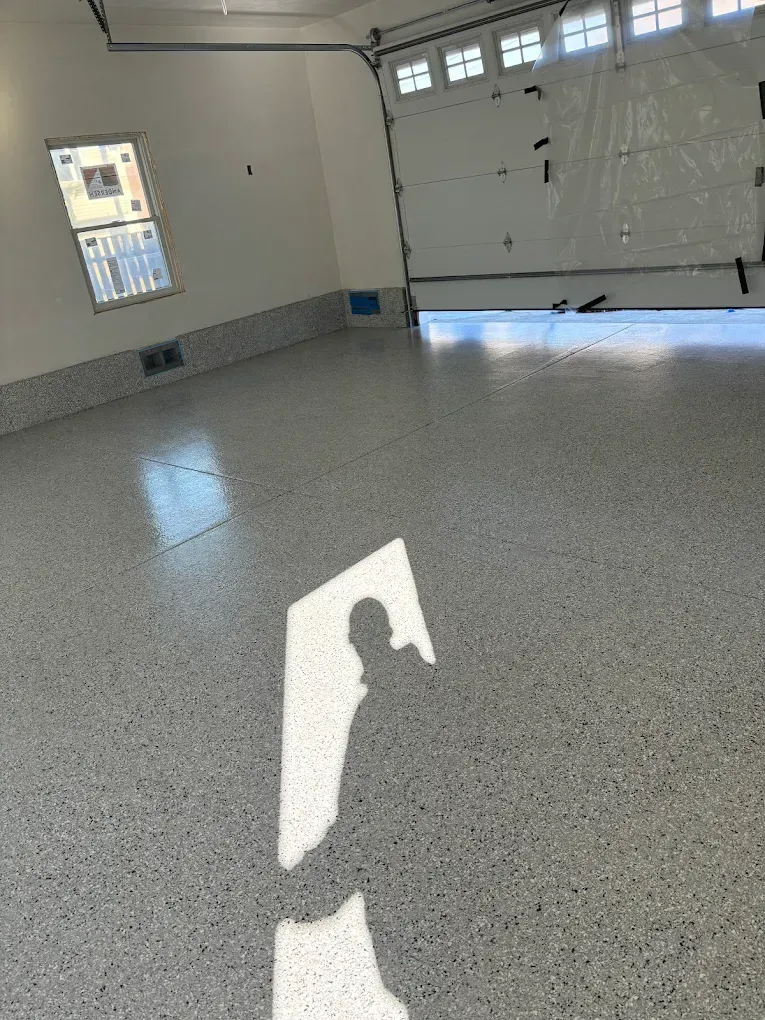
How Polyurea Handles Structural Movement
The resin's flexibility allows it to stretch slightly when the underlying concrete expands during temperature changes, which is why it performs well in warehouse districts and commercial corridors where slabs experience thermal cycling from loading dock doors opening repeatedly throughout the day. The Perfectionist Coatings & Polishing handles installations ranging from residential garages to commercial spaces exceeding 3,300 square feet, adjusting application technique based on substrate condition and expected load.
Once cured, your floor shows no tackiness even in high humidity, resists hot tire pickup that can pull softer coatings away from the concrete, and maintains traction without requiring additional grit additives that wear down over time. The surface remains chemically stable when exposed to petroleum products, deicing salts, and hydraulic fluids common in commercial settings.
Job sizing determines whether installation completes in a single visit or requires staged application across multiple days, particularly for facilities that cannot shut down entirely. Climate control during application matters less with polyurea than with other systems because the cure reaction generates enough heat internally to proceed even in cooler temperatures.
What Property Owners Usually Ask
Commercial clients throughout Rhode Island and Massachusetts frequently inquire about cure speed and long-term performance under specific use conditions.
How quickly does polyurea cure compared to epoxy?
The material reaches full hardness within one hour of application, allowing immediate return to service rather than waiting overnight or longer for traditional coatings to cure.
What makes polyurea suitable for freeze-thaw climates?
Its elasticity prevents the coating from debonding when concrete contracts in cold weather and expands during warming, a movement cycle that cracks rigid coatings over repeated seasons in Mapleville and surrounding areas.
When should I choose polyurea over polyaspartic or epoxy?
Properties with heavy forklift traffic, rapid turnaround requirements, or outdoor exposure where UV stability matters less than impact resistance benefit most from polyurea's specific performance characteristics.
What surface preparation does polyurea require?
Concrete must be ground to remove laitance and create a clean profile, with all oils and existing coatings completely removed to ensure proper adhesion.
How does polyurea perform on cracked concrete?
The coating bridges hairline cracks and remains bonded even when minor slab movement occurs, though structural cracks require repair before any coating application.
The Perfectionist Coatings & Polishing trains specifically in polyurea application alongside epoxy and polishing techniques, ensuring the chosen system matches your facility's operational demands. Contact us to discuss square footage, usage patterns, and scheduling requirements for your project.