
Mechanical Finishing That Reveals Aggregate
Concrete polishing in Mapleville for warehouse floors and residential spaces requiring low-maintenance, finished surfaces
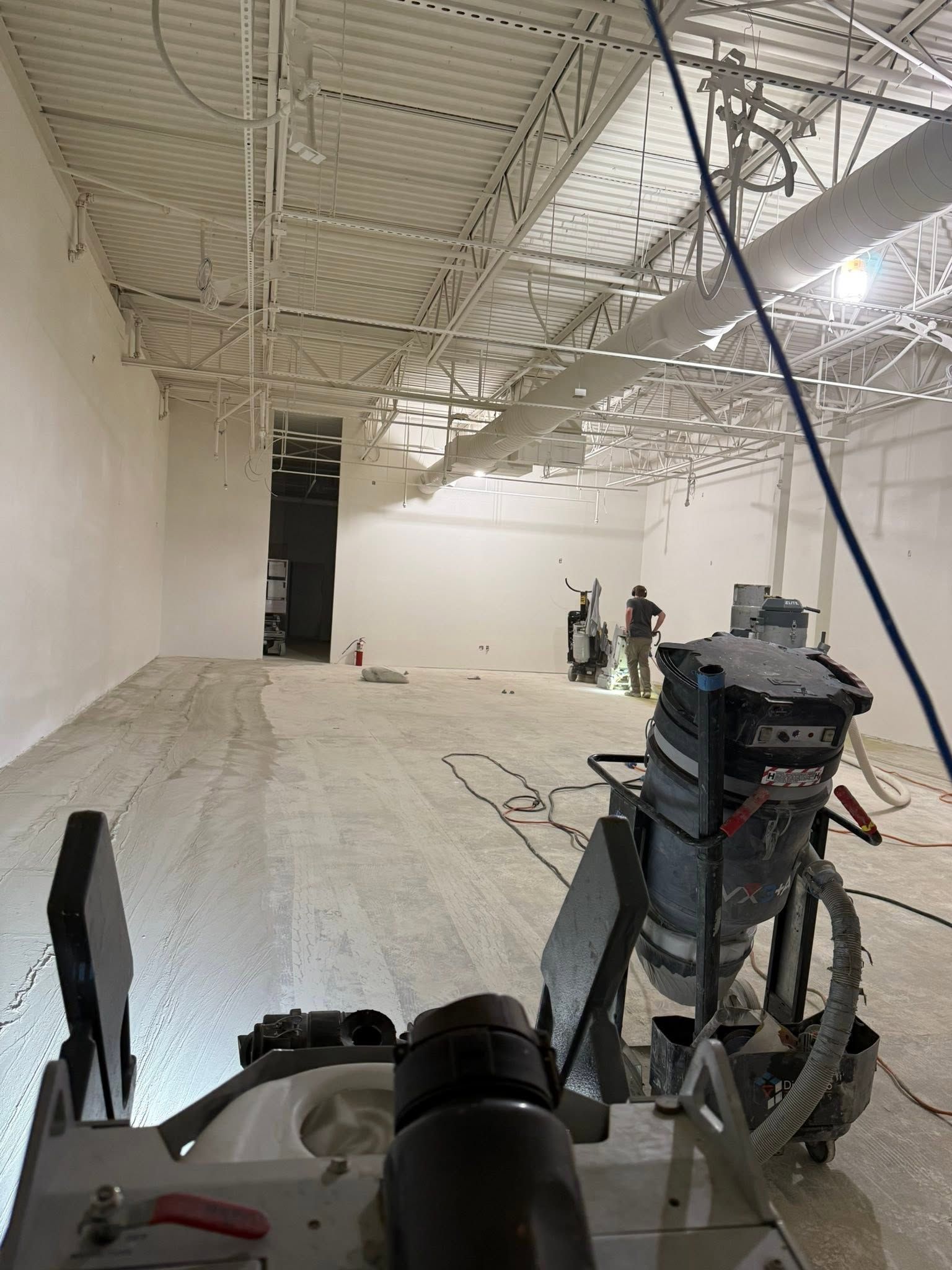
Grinding concrete through progressively finer diamond abrasives exposes the aggregate beneath the surface cream, creating a finish that ranges from matte to mirror-like depending on the final grit used. The Perfectionist Coatings & Polishing polishes concrete throughout Mapleville and the surrounding Rhode Island and Massachusetts service areas, working on both commercial warehouse districts and residential properties where homeowners want the industrial aesthetic without applying a topical coating. You need this when the existing slab is structurally sound but visually dull, or when you want a floor that gains traction when wet rather than becoming slippery like some sealed surfaces.
The process starts with coarse metal-bond diamonds that remove surface irregularities and old coatings, progresses through transitional grits that refine the scratch pattern, and finishes with resin-bond diamonds that create the polish. Each stage removes the scratches left by the previous grit, so skipping steps results in visible swirl marks that remain even after finer polishing.
Arrange an evaluation to determine whether your slab has adequate aggregate density for polishing or requires alternative finishing.
The Difference Between Polished and Coated Concrete
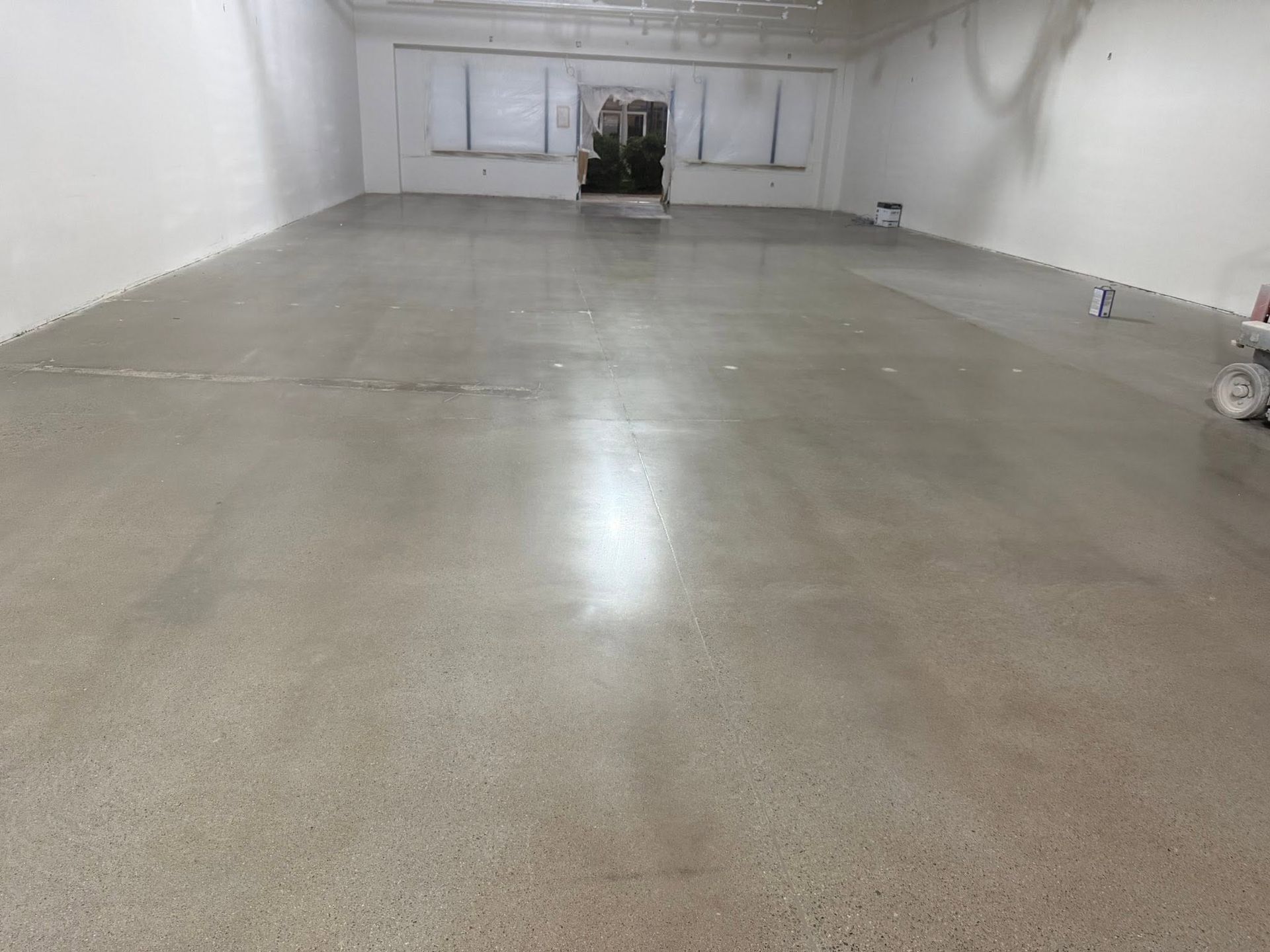
Polishing modifies the concrete itself rather than adding a layer on top, which means there is no coating to delaminate, scratch through, or wear away over time. The densifier applied mid-process reacts chemically with free lime in the concrete to harden the surface, filling pores and creating a tighter structure that resists dust generation and liquid absorption. Standard residential jobs covering 700 to 800 square feet take one full day to complete, while larger commercial projects extend across multiple days based on square footage and the number of grit stages required to reach the desired sheen level.
After polishing, your floor reflects overhead lighting noticeably, shows the natural color variation and aggregate pattern within the concrete mix, and cleans with plain water because there is no coating to protect or maintain. Forklift traffic, foot traffic, and even metal dragging across the surface cause far less visible damage than they would on softer toppings.
The final appearance depends heavily on what aggregate was used in the original concrete pour, so older slabs with river rock or decorative stone show more visual interest than newer mixes using standard crushed gravel. Polishing also highlights any existing stains, cracks, or repairs, which some clients view as character and others prefer to minimize through strategic saw cuts or decorative scoring before grinding begins.
Questions Before Starting Your Project
Property owners in warehouse districts and residential neighborhoods typically ask about durability and what the process involves before committing to polishing.
What preparation does the concrete need before polishing?
The slab must be clean and free of adhesives, coatings, or heavy oils that would clog the diamonds during grinding.
How many grinding stages does a typical polishing job require?
Most residential projects use six to eight grit stages, starting around 30 or 50 grit and finishing at 400 to 1500 grit depending on whether you want a satin or high-gloss result.
When should I choose polishing over epoxy coating?
Polishing works best when you want a natural concrete appearance, need maximum abrasion resistance, or want to avoid the maintenance requirements that come with topical coatings in high-traffic commercial settings throughout Rhode Island and Massachusetts.
What does the densifier actually do to the concrete?
It reacts with calcium hydroxide in the cement paste to form calcium silicate hydrate, which fills capillaries and hardens the surface to reduce dusting and improve wear resistance.
How does polished concrete hold up to vehicle traffic?
The hardened surface resists tire wear and shows minimal tracking compared to coated floors, though sharp impacts can still chip or crack the concrete just as they would on any hard surface.
The Perfectionist Coatings & Polishing started in the industry performing epoxy application and concrete polishing, bringing years of hands-on grinding experience to each project. Contact us to review your slab condition and discuss the sheen level that matches your space.